
Westminster to the Strand
Begin before first light at Westminster Bridge, move inland through Horse Guards Parade and close among the ordered stone, courtyards and wet reflections of Somerset House.
 msarchia
 London / five-day photography field guide
Five photography-led days through Westminster, the City, East and West London, Hampstead and Greenwich—sequenced by light quality and urban character rather than a predictable list of landmarks.
The principle
London becomes coherent when each day owns a distinct visual register: ceremonial river stone, painted iron, domestic colour, garden texture and skyline distance.
The itinerary keeps recognisable anchors, but uses them as transitions between neighbourhoods. Early starts, protected market hours, selective transport and a restrained camera kit preserve time for atmosphere instead of turning the route into a race across icons.
Follow the five-day routeThe visual language
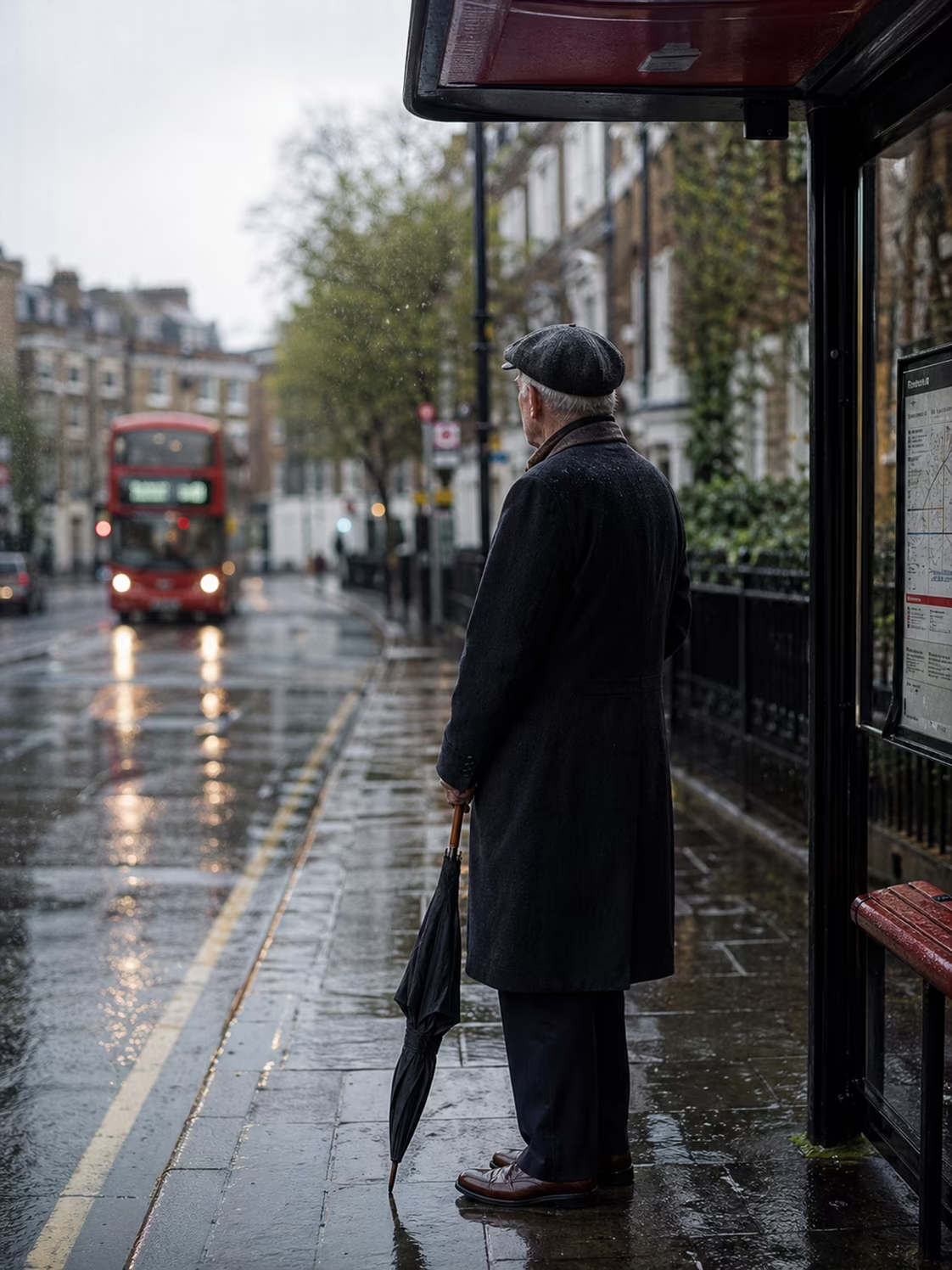
London often photographs best when the weather compresses the palette. Wet pavement, dark ironwork, muted façades and one controlled red accent give the city a rhythm that feels lived rather than staged.

The itinerary
Begin before first light at Westminster Bridge, move inland through Horse Guards Parade and close among the ordered stone, courtyards and wet reflections of Somerset House.
Read painted iron at Leadenhall before the lunch wave, use the Victorian roof of Spitalfields as a frame, then let Brick Lane and the Old Truman Brewery loosen the visual language into dusk.
Shift into domestic colour and market rhythm on Portobello Road, reduce the frame inside Kyoto Garden and finish beside the calmer water and stucco reflections of Little Venice.
Use the Hill Garden and Pergola for long lines, Fenton House for domestic scale and Primrose Hill for the city held at a deliberate distance during the final light.
Start above the river in Greenwich Park, work the naval geometry below and return to the City for a free rooftop ending at the Garden at 120.
Photography rhythm
Use the first hours to protect clean river lines, ceremonial space and structural market frames before movement begins to dominate.
Flat weather is an advantage in arcades, gardens and brick streets: colour, iron, foliage and wet pavement remain controlled in one tonal system.
Let buses, lamps and reflected traffic become small warm signals while river and skyline settle into cooler distance.
Inside the guide
Five distinct chapters spanning Central, East, West, North and South East London without unnecessary returns.
Practical guidance for dawn, bright overcast, rain, golden hour and blue-hour skyline work.
Icons, markets, gardens, neighbourhoods and public viewpoints selected for real photographic variety.
A restrained kit, useful working settings and framing logic designed for mobility and discretion.
Clear distinctions between public access, timed venues, personal photography and locations requiring advance checks.
Hotels, cafés, restaurants, rooftops and river positions chosen for both route logic and visual value.
