
Minami and Dotonbori
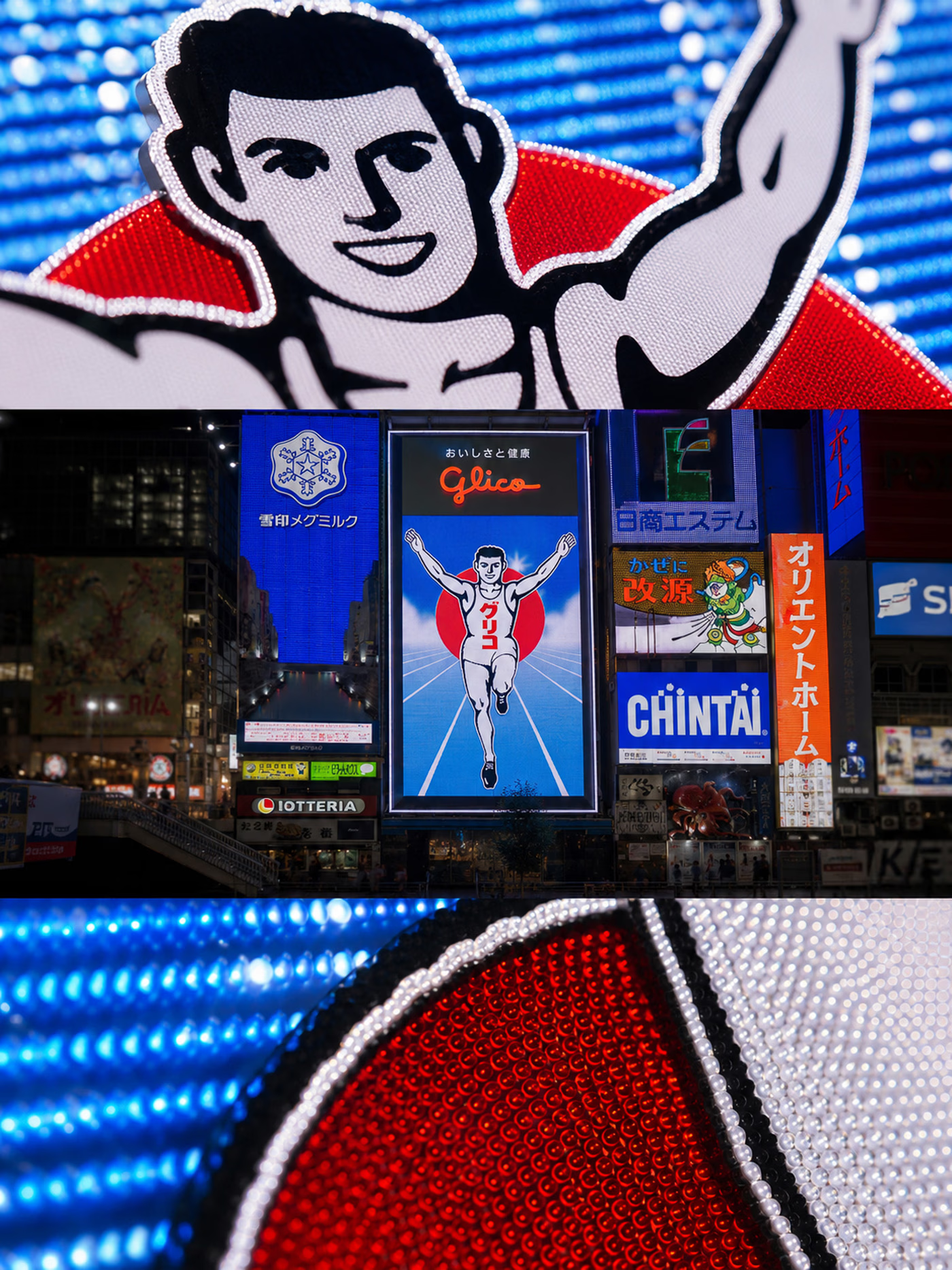
Begin with orientation through Namba, Hozenji and Dotonbori, letting daylight give way to signage, reflections and the evening energy that defines southern Osaka.
 msarchia
 Osaka / five-day street photography itinerary
Five considered days through Minami, retro Osaka, Nara, the creative north and a final castle chapter—sequenced around street energy, human scale, changing light and enough time to observe before moving on.
The principle
Osaka becomes legible when its contrasts are allowed to arrive in sequence: commercial intensity, neighbourhood texture, temple quiet and the measured geometry of Nara.
The route holds one base in Osaka and builds five distinct chapters around Minami, Shinsekai, Tsuruhashi, Nara, Kita, Nakazakicho, Temma and the castle. Timing is treated as part of the photographic decision, so neon, food culture, architecture and street detail never compete for the same hour.
Follow the five-day routeThe visual language
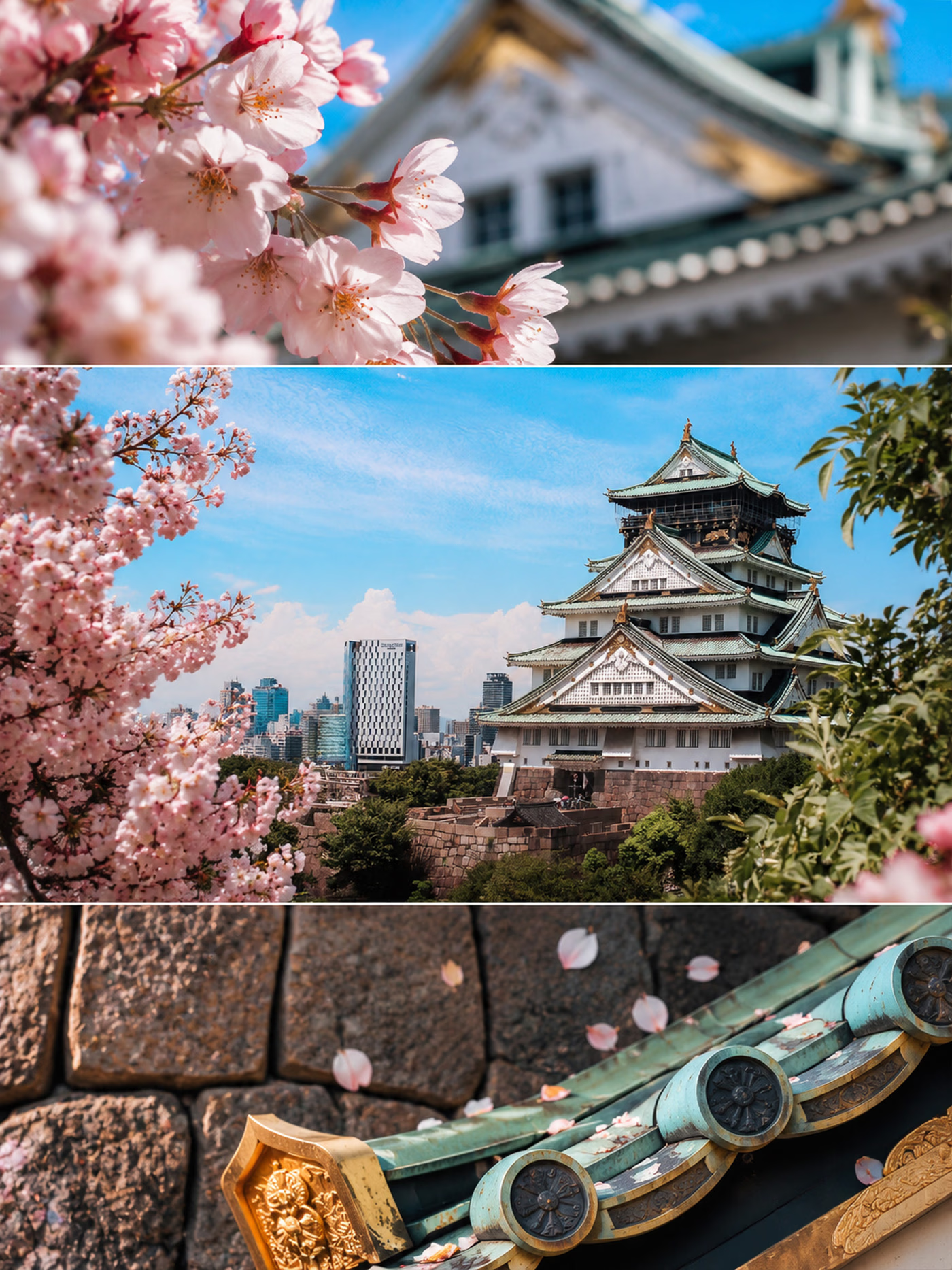
The strongest Osaka frames combine vertical signs, compressed streets, warm shopfronts and quieter architectural intervals. The two photographic sequences below remain intact, preserving the original three-panel rhythm rather than forcing individual crops.
The itinerary
Begin with orientation through Namba, Hozenji and Dotonbori, letting daylight give way to signage, reflections and the evening energy that defines southern Osaka.
Move from quieter sacred spaces into Tsutenkaku, retro streets and the layered food culture of Tsuruhashi without compressing every neighbourhood into one visual language.
Use the day trip as a change of scale: open parkland, temple architecture, forest paths and slower observation before returning to Osaka for the evening.
Connect contemporary Kita with the smaller façades of Nakazakicho and the lived-in texture of Temma, protecting late light for streets rather than landmarks.
Close with Osaka Castle, architectural detail and one final unhurried city sequence—leaving enough margin for the image that appears only after the itinerary feels complete.
Photography rhythm
Use softer early light for temples, castle grounds, covered arcades and the architectural order that is harder to read once the streets fill.
Hold the transition hours for Shinsekai, Nakazakicho and Temma, where façades, shopfronts and compressed streets gain depth without becoming spectacle.
Photograph Dotonbori and Namba as layered urban spaces—balancing signs, reflections, scale and movement instead of isolating brightness as a visual effect.
Inside the guide
A paced itinerary linking Minami, retro Osaka, Nara, the creative north and the castle without changing accommodation.
Product-specific Google Maps routes support each day with practical stops, neighbourhood sequence and efficient movement.
Clear guidance for temples, street detail, shopfront light, night colour and the intervals when Osaka becomes visually coherent.
Concise orientation for Namba, Shinsekai, Tsuruhashi, Kita, Nakazakicho, Temma and the castle district.
A practical structure for experiencing Osaka’s food culture without allowing restaurant decisions to fracture the photographic route.
Five nights in Osaka reduce friction, keep Nara simple and preserve time for the city’s changing tempo.
