
Montmartre
Begin before the crowds at Sacré-Cœur, then move through Place du Tertre, the quieter lanes, Musée de Montmartre and the neighbourhood’s evening glow without reducing the hill to a single viewpoint.
 msarchia
 Paris / five-day art and architecture itinerary
Five considered days through Montmartre, the islands, the Latin Quarter, the Louvre, modern Paris and the city’s less expected eastern edge—sequenced around art, architecture, neighbourhood texture and the hours when Paris becomes most photographic.
The principle
Paris is strongest when the landmark is allowed to remain part of the street rather than becoming the entire frame.
The route connects the city’s major visual anchors with quieter thresholds: a covered passage after rain, low light across garden chairs, a narrow Left Bank street and the pause between museum rooms and evening façades. Each day balances orientation with enough space to notice what a checklist would miss.
Follow the five-day routeThe visual language
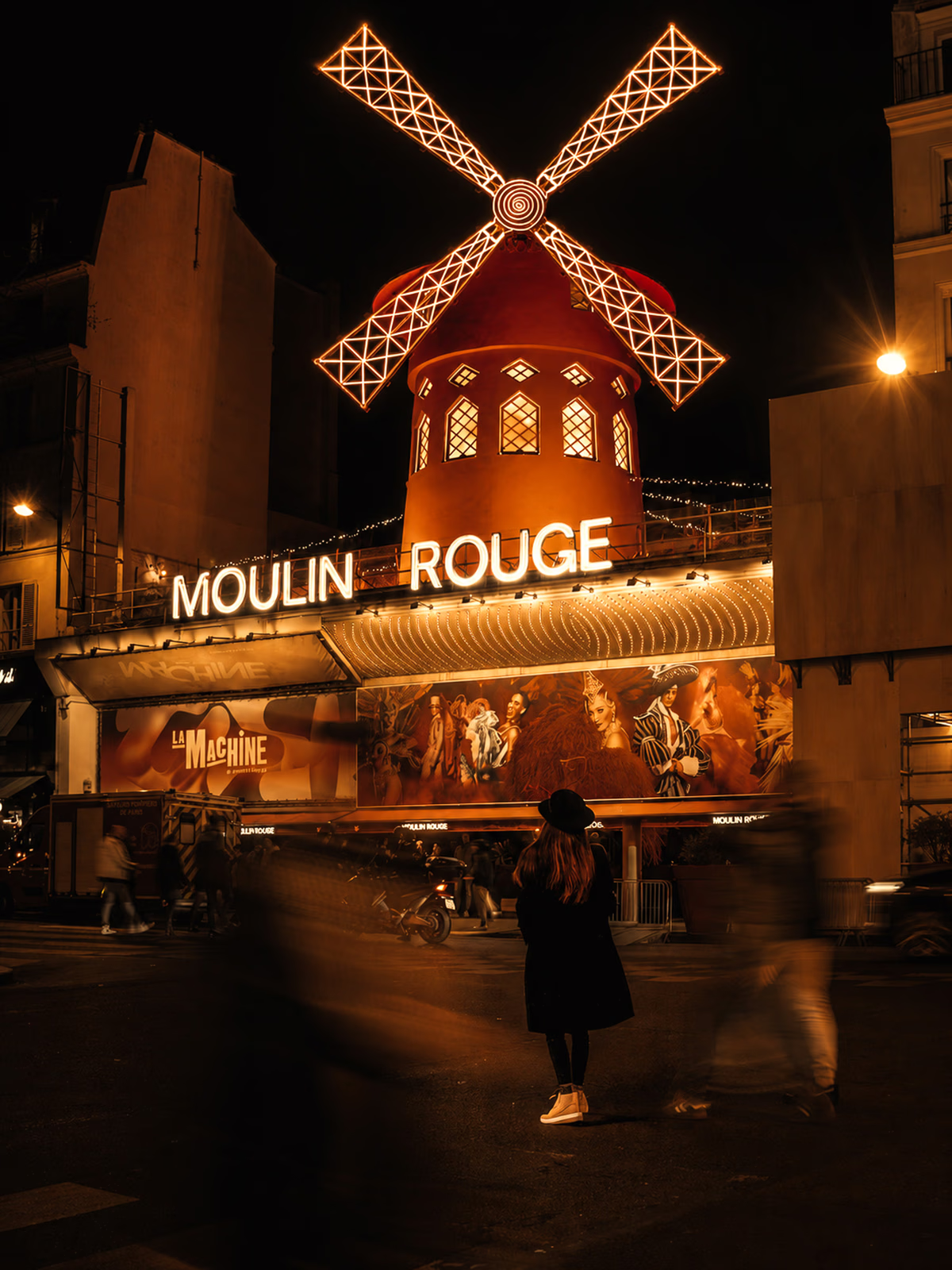
Paris moves between controlled architectural symmetry and small, cinematic interruptions. The strongest photographs protect vertical lines, wait for directional light and let the city’s texture carry the story without forcing every frame toward the obvious landmark.

The itinerary
Begin before the crowds at Sacré-Cœur, then move through Place du Tertre, the quieter lanes, Musée de Montmartre and the neighbourhood’s evening glow without reducing the hill to a single viewpoint.
Cross medieval Paris through Notre-Dame, Sainte-Chapelle and Île Saint-Louis before slowing through Saint-Germain, Luxembourg Gardens, the Panthéon and the Left Bank at dusk.
Use the museum as the day’s anchor, then let the route breathe through the Tuileries, Palais-Royal, Place de la Concorde and the Arc de Triomphe as afternoon light becomes evening.
Frame the tower from street level and Trocadéro before turning toward contemporary architecture, the Palais Garnier, Musée du quai Branly and one final walk along the Seine after dark.
Close with Belleville, the Canal Saint-Martin, Père Lachaise or the Catacombs—choosing one eastern or subterranean chapter instead of compressing every remaining attraction into the departure day.
Photography rhythm
Use early hours for Montmartre steps, riverside symmetry, covered passages and façades before pedestrian movement begins to dominate the frame.
Hold low light for the Panthéon, Tuileries, the Eiffel Tower and long Parisian streets where texture and depth become visible together.
Let illuminated signs, café windows and wet pavement punctuate the darkness without turning the city into an undifferentiated field of light.
Inside the guide
A paced itinerary linking Montmartre, the islands, the Latin Quarter, the Louvre, modern Paris and an offbeat final chapter.
Clear recommendations for sunrise, low afternoon light, blue hour, rain, night streets and the moments when major spaces feel less crowded.
Concise orientation across historic monuments, museums, covered passages, contemporary buildings and neighbourhood form.
Practical sequencing that connects landmarks with cafés, gardens, bookshops and smaller streets instead of treating them as isolated stops.
Selected dining and boutique-hotel ideas positioned around the route so practical decisions support rather than interrupt the journey.
Transport, weather, packing, etiquette, connectivity and safety guidance gathered before the day-by-day itinerary begins.
