
Alfama and the first hills
Enter through Alfama’s lanes and azulejos, use Portas do Sol and Santa Luzia to read the city from above, then let Chiado, Bairro Alto, Portuguese wine and a possible late fado room carry the first evening.
 msarchia
 Lisbon / three-day design-conscious itinerary
Three considered days through Alfama, Belém, Alcântara, Chiado, Príncipe Real and the Tagus—sequenced around hilltop viewpoints, Portuguese design, local food and the warm light that gives Lisbon its visual rhythm.
The principle
Lisbon is most coherent when its hills, light and neighbourhoods are allowed to connect instead of becoming isolated stops.
The itinerary groups Alfama and Graça, Belém and Alcântara, then Chiado and Príncipe Real into deliberate chapters. Trams, short rides and river crossings protect time for architecture, food and the viewpoints that reveal the city as a whole.
Follow the three-day routeThe visual language
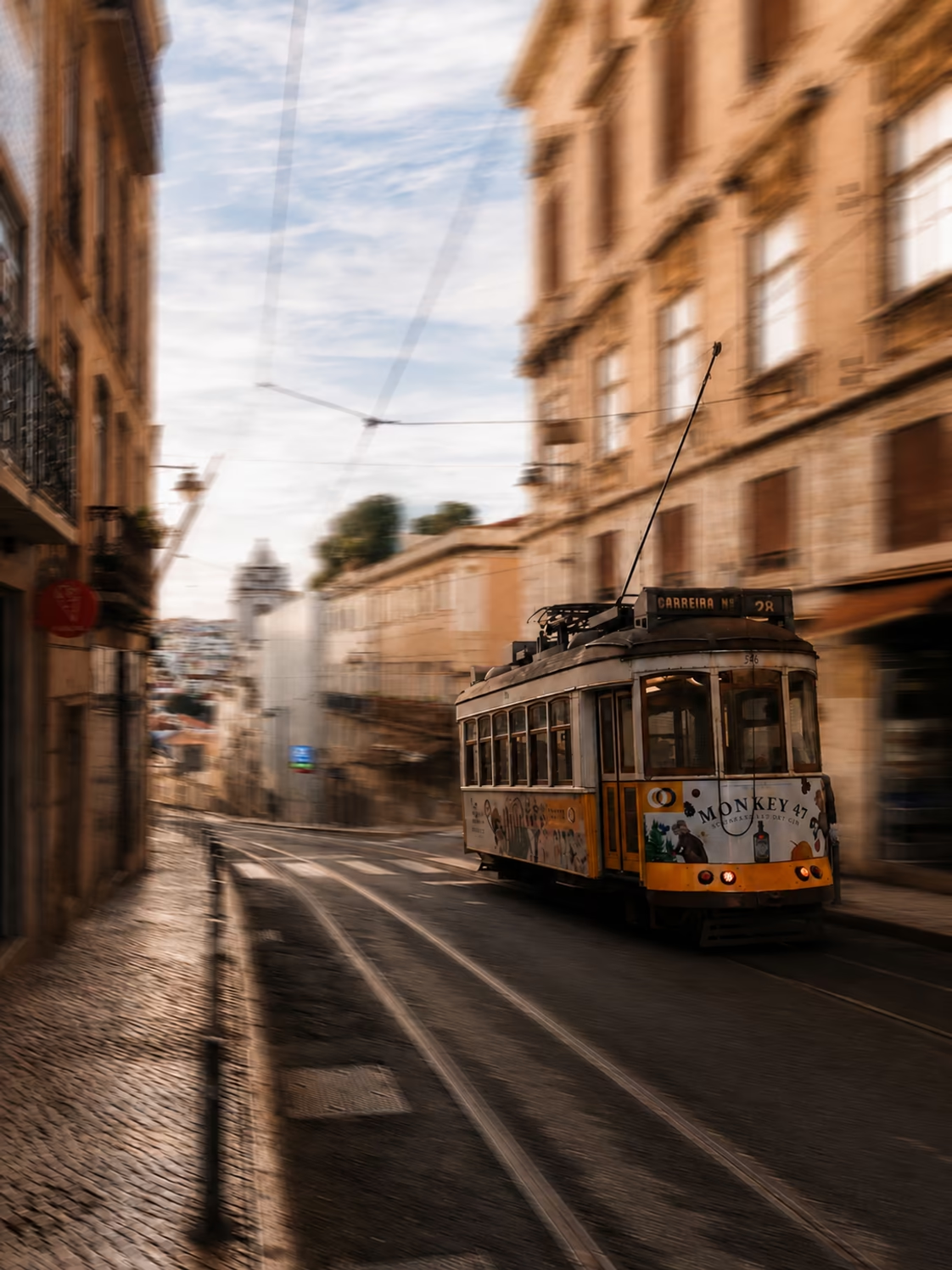
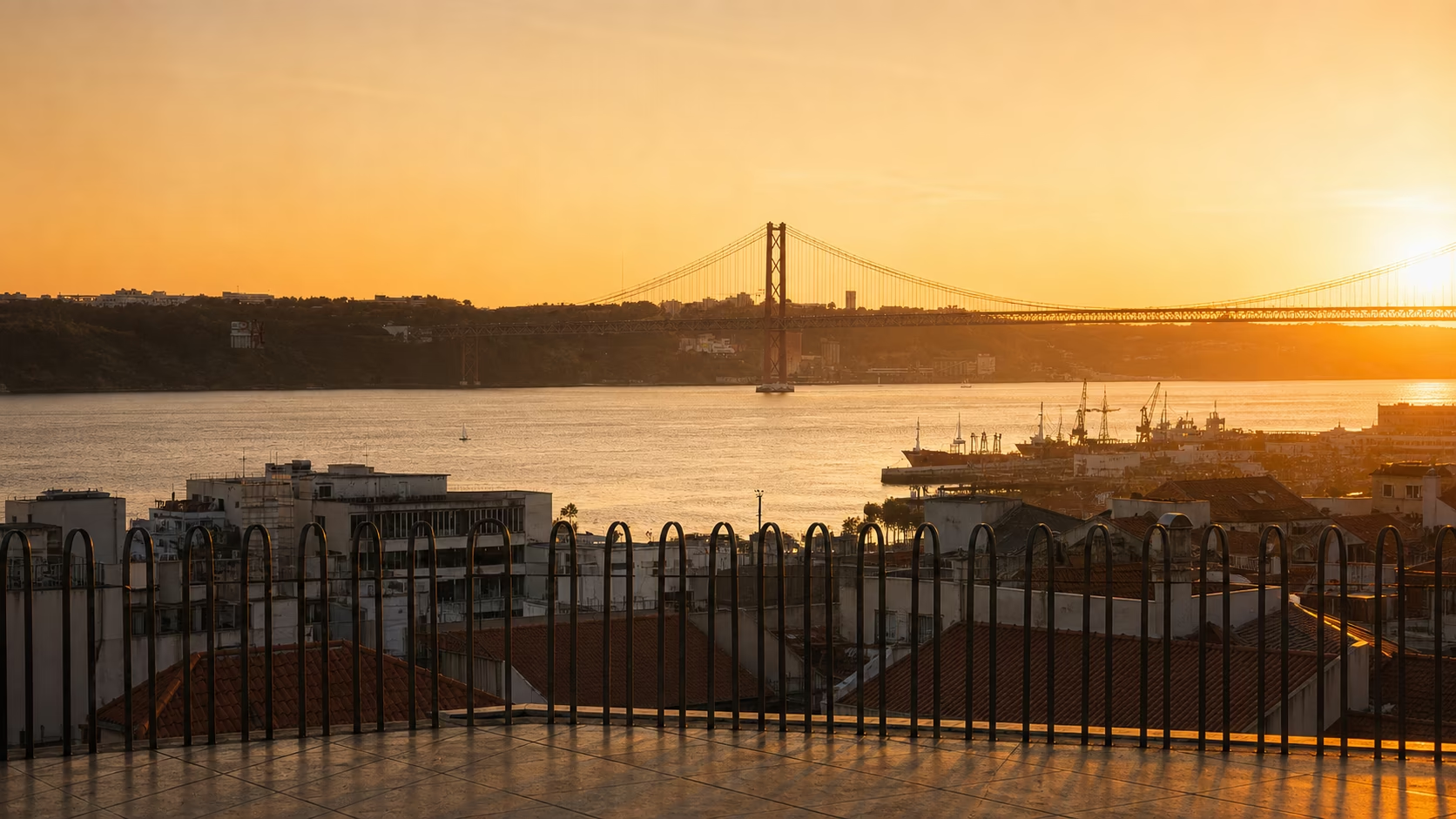
Lisbon’s image is carried by moving trams, compressed streets and the sudden release of the Tagus. The photographic rhythm shifts between warm façades, graphic infrastructure and open Atlantic distance.
The itinerary
Enter through Alfama’s lanes and azulejos, use Portas do Sol and Santa Luzia to read the city from above, then let Chiado, Bairro Alto, Portuguese wine and a possible late fado room carry the first evening.
Begin early at Jerónimos and the river monuments, move through MAAT and the waterfront, then shift to LX Factory, Chiado and Príncipe Real for independent design, books, galleries and contemporary Portuguese food.
Use Senhora do Monte for the clearest morning panorama, descend through the old city, then connect Campo de Ourique, Príncipe Real and a final river chapter—either Ribeira das Naus or the ferry to Cacilhas.
Photography rhythm
Reach Graça, Portas do Sol or Belém before the visual field becomes crowded; morning separation makes roofs, stone and the Tagus easier to read.
Warm side light turns tile, stucco and rails into one graphic system—especially on the slopes between Alfama, Chiado and Bairro Alto.
Use Santa Luzia, São Pedro de Alcântara or Cacilhas to let the skyline settle into the broad reflected light of the Tagus.
Inside the guide
Three coherent chapters from old Lisbon and Belém to design districts, viewpoints and the river.
A practical route that respects Lisbon’s hills and avoids unnecessary returns across the city.
Manueline stone, azulejos, MAAT, LX Factory, independent stores and contemporary galleries.
Pastéis, petiscos, seafood, Portuguese wine and flexible dining options integrated into each day.
Clear moments for hilltop panoramas, warm street light, the Tagus and the city after dusk.
Tram, ferry, walking and selective ride guidance designed around comfort and photographic time.
